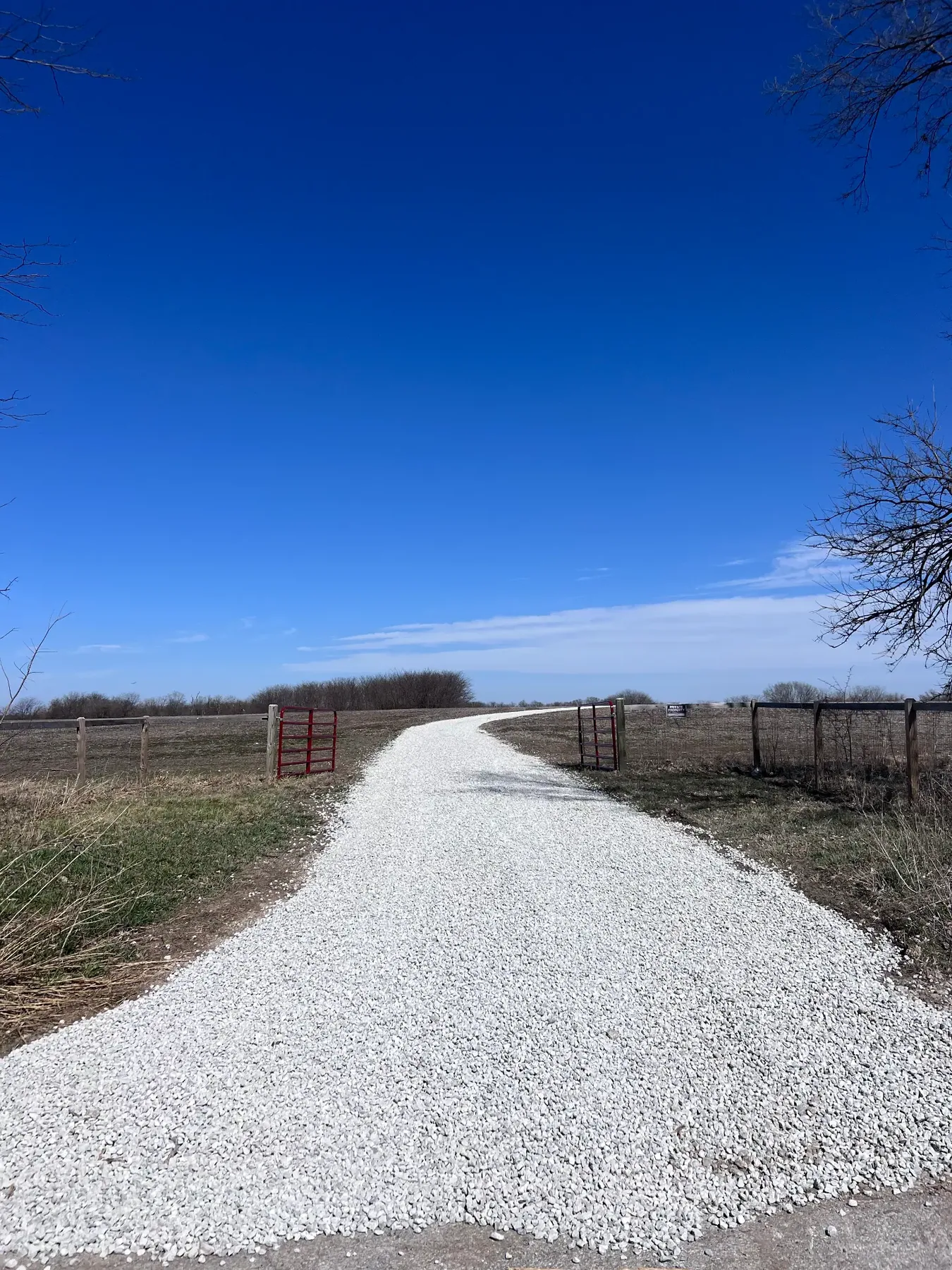
WHAT A GRAVEL DRIVEWAY ACTUALLY COSTS
A drive that lasts is built from the subgrade up. Here is what goes into a gravel driveway bid in eastern Kansas and western Missouri.
A drive that lasts is built from the subgrade up. Here is what goes into a gravel driveway bid in eastern Kansas and western Missouri.
Rock is the cheap part. Everything under it decides the price.
Two drives the same length can be thousands apart. One runs across firm ground on a gentle slope. The other crosses a wet draw, needs a culvert, and has soft clay that swallows rock until a base is built under it.
Rather than post a number that will not match your property, here is every line item that moves a gravel drive bid up or down, so you can read any estimate you get, ours or anyone else's.
The obvious one. A single lane approach off a county road is a different job than a quarter mile run back to a shop with a turnaround.
Soft clay has to be stabilized or it pumps rock down into the mud. Firm ground takes rock straight away. This is the single biggest swing in most bids.
A proper drive gets a coarse base course, then a finer surface. Skipping the base is how a drive turns to potholes in one wet spring.
Ditch crossings, culvert pipe, headwalls, and cutting ditch line so water leaves the drive instead of running down it.
The surface has to shed water to both sides. Box blade work and compaction take time but they are why a drive holds its shape.
New drives through brush or timber need clearing first, and cut and fill where the route crosses grade.
Rock is priced by the load, and the quarry run matters. Properties farther out carry more freight per ton.
| Job | Relative cost | What is involved |
|---|---|---|
| Top dress an existing drive | Lowest | Fresh surface rock spread and shaped over a base that is still sound. |
| Regrade and repair | Low to moderate | Box blade the ruts out, re crown, patch soft spots, add rock where it is thin. |
| Rebuild on a bad base | Moderate to higher | Strip the failed surface, stabilize the subgrade, new base course and surface. |
| New drive on open ground | Moderate to higher | Stake the route, strip topsoil, shape, base, surface, compact. |
| New drive with a culvert or long run | Highest | Everything above plus pipe, ditch work, cut and fill, and more rock. |
A well built drive still wants a grading pass every year or two, usually after a wet spring. That is a short, inexpensive visit compared to a rebuild.
Watch for the early signs: water standing in wheel ruts, the crown flattening out, or the ditch filling in with silt. Catch those and the base underneath never fails.
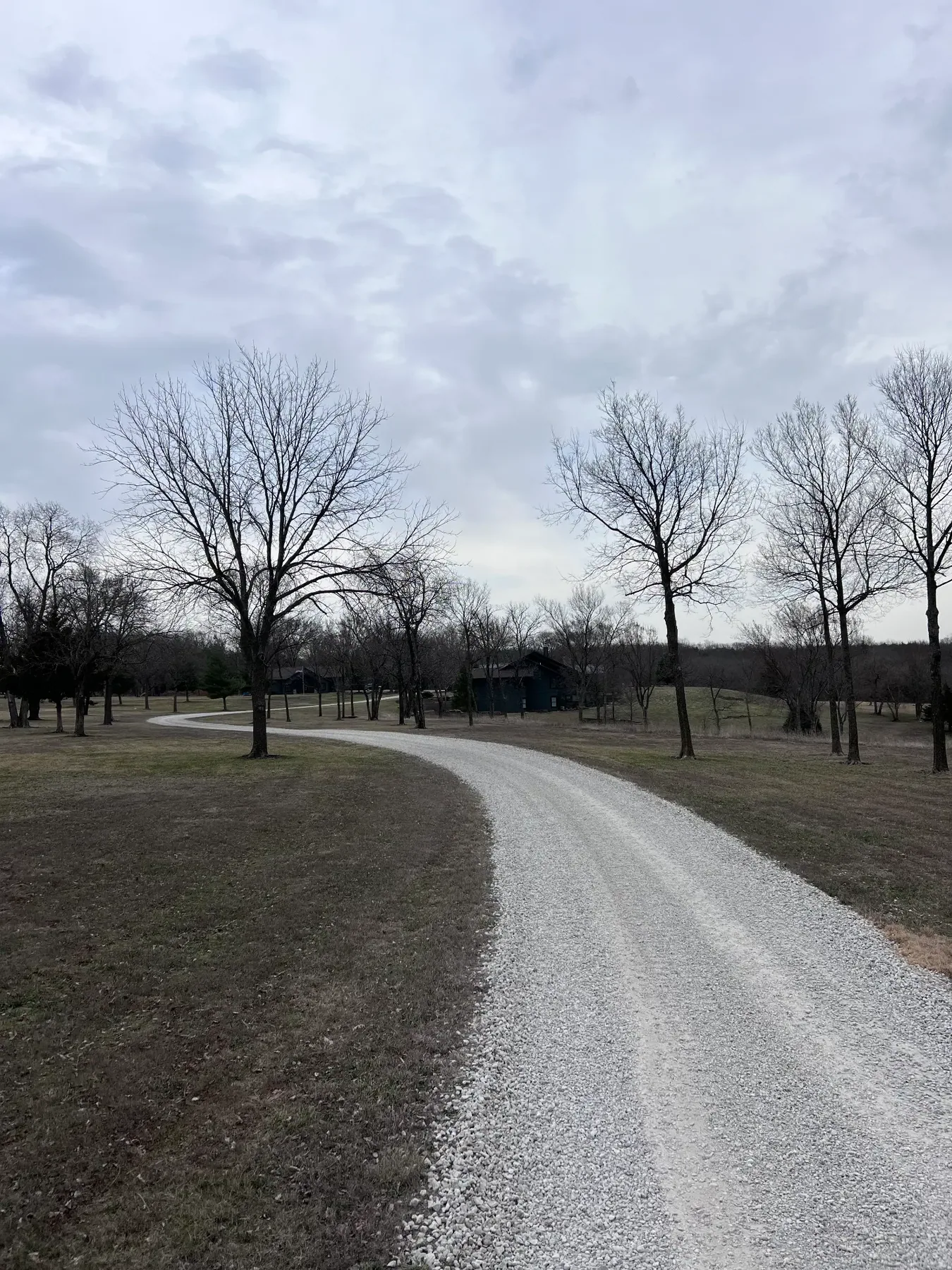
Most drives around here get a coarse base rock for structure and a finer surface rock on top that packs tight and drives smooth. The right mix depends on your soil, the grade, and the traffic, from passenger cars to grain trucks.
It depends entirely on what is underneath. Firm ground needs less. Soft clay needs a deeper base, and sometimes fabric under it, or the rock just keeps sinking. We check the subgrade before we quote a depth.
Often, yes. If the base is intact, regrading and a fresh surface course brings it right back. We will tell you honestly when a rebuild is the cheaper long term answer.
If the drive crosses a ditch or a natural drainage, yes, and your county may spell out the size. We size it for the water it has to carry and set it at the right depth and fall.
A repair or top dress is usually a single day. A full new drive with clearing, base work, and a culvert typically runs a few days depending on length and weather.
Ashton walks the route, checks the ground and the drainage, and gives you a written bid. No charge for the visit.
See our driveway construction and repair page