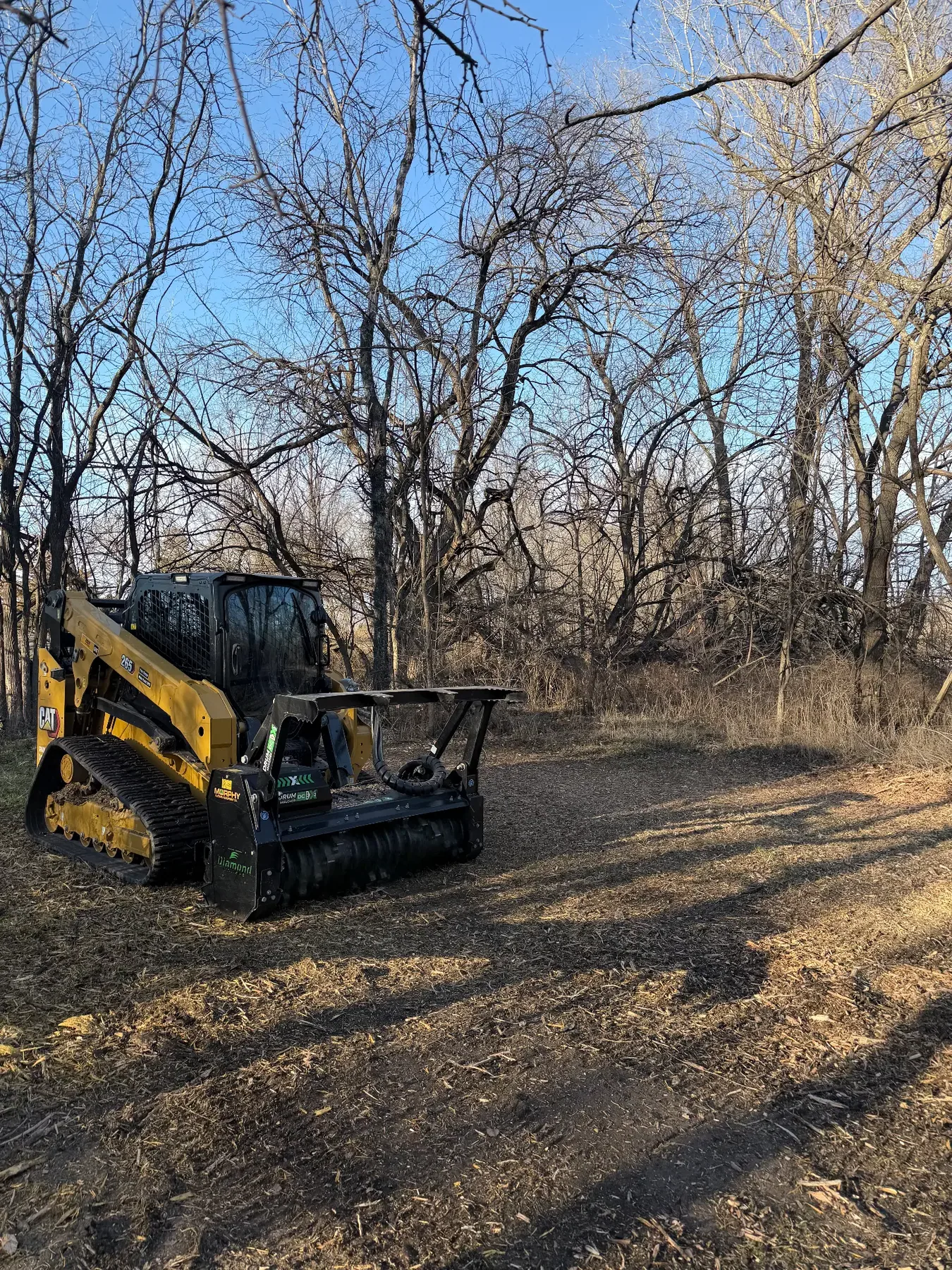
FORESTRY MULCHING VS BULLDOZING
Two ways to take the brush off a property, and they leave you with very different ground. Here is how Ashton decides which one a job calls for.
Two ways to take the brush off a property, and they leave you with very different ground. Here is how Ashton decides which one a job calls for.
Mulch it in place, or push it into a pile?
A forestry mulcher grinds standing brush and small trees into chips and leaves them on the ground as cover. A dozer pushes everything over, roots and all, and you are left with a pile of material and bare dirt that has to be dealt with.
Mulching wins on speed, cleanup, and erosion. Dozing wins when the roots have to come out and the ground has to be reshaped anyway. Plenty of jobs use both: mulch the light stuff, bring in iron for the heavy timber and the stumps.
| What you care about | Forestry mulching | Bulldozing |
|---|---|---|
| Debris | Stays on site as ground cover | Piles that get burned, buried, or hauled |
| Finished look | Chipped, walkable, still rooted | Bare soil, ready to shape |
| Soil and erosion | Roots hold the hillside, chips slow runoff | Exposed dirt until it is seeded |
| Stumps | Ground to grade, root ball stays | Pulled out completely |
| Access needed | One machine, tight spots are fine | Wider working room and haul routes |
| Usual cost driver | Machine hours and stem size | Machine hours plus debris handling |
Cedar, honeysuckle, and volunteer saplings across open ground go fast under a drum mulcher, and you are walking the property the same day.
Thinning the understory opens up a hunting tract or a trail system without turning it into a dirt lot.
Leaving the root mass in the ground is the whole point on ground that would wash out if you scraped it.
Neighbors close by, a burn ban, or nowhere to stack material. Mulch solves all three.
A house pad, shop, or barn needs the stumps and roots gone so the fill compacts properly. Mulch left in the footprint will settle later.
Big oaks, walnut, and cottonwood are past what a mulcher head handles efficiently. Cut, grapple, and stack is quicker and cheaper.
If the ground needs shaping for drainage anyway, the dirt work and the clearing happen in one mobilization.
Turning timber back into crop ground or pasture means the root ball comes out, not just the top.
Every bid starts with a walk of the ground. What we are looking at:
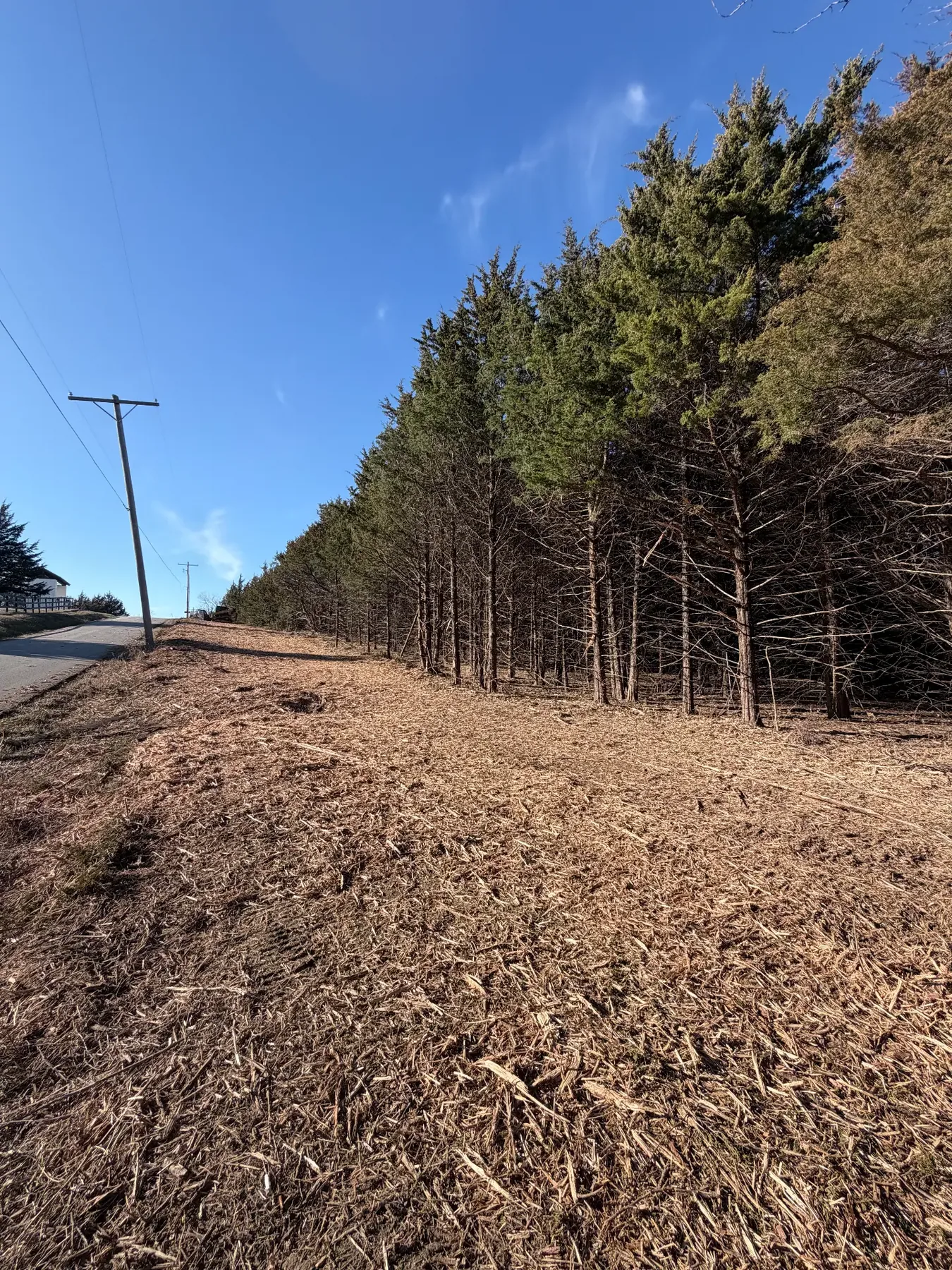
Not by itself. The top is gone and the chips shade the ground, but cedar and honeysuckle can come back from the stump. Most properties look good for a few years, and a quick maintenance pass or spot spraying keeps it that way.
There is a practical limit. Small trees and brush grind fast. Once trunks get large the mulcher starts costing more in machine hours than it saves, and cutting with a grapple is the better value. We tell you where your property falls when we walk it.
A normal layer breaks down and feeds the soil. It only becomes a problem when it is piled thick, so we spread as we go and keep the depth reasonable where you plan to seed.
Mulching usually costs less overall on light and medium brush because nothing gets hauled. Once stumps have to come out or timber is large, the dozer and excavator route wins on both time and money.
That is the most common plan. Mulch the brushy acres, bring the excavator in for the big timber and the build pad. Same mobilization, one bid.
Send the address and what you want the ground to look like when it is done. The visit and the bid are free.
See our forestry mulching service page